

Website owners spend countless hours on manual SEO tasks that could run automatically. Automatic SEO tools now handle everything from keyword research to content optimization without constant human intervention.
We at Kolorfirst LLC see businesses transform their search rankings by implementing smart automation workflows. This guide shows you exactly how to set up these systems and measure their impact on your website’s performance.
Understanding Automatic SEO Tools and Technologies
SEO automation platforms like Surfer AI and AirOps handle the heavy work that previously required hours of manual effort. Surfer AI cuts content production time from 8 hours to 2-3 hours per page through AI-assisted content creation and optimization features. AirOps specializes in content operations automation, which makes it perfect for teams that want to scale SEO efforts quickly. These platforms connect seamlessly with Google Search Console and Google Analytics, where they pull real-time data to inform automated decisions.
SEO Automation Platforms and Software Solutions
Modern automation platforms like Gumloop enable non-technical users to create AI agents for various workflows without an engineering team. SE Ranking targets agencies with AI Overviews tracking and auditing capabilities that maintain competitive SEO performance. Alli AI transforms any CMS into an AI optimization tool, which allows users to implement and approve changes quickly without developer intervention. The pricing of effective SEO automation tools stays lower than the cost of hiring human resources for manual tasks (making them cost-effective for most businesses).
AI-Powered Content Optimization Tools
AI tools like Clearscope detect content decay automatically and identify pages that lose traffic before rankings drop significantly. Koala AI allows complete customization of content parameters including tone and word count while it maintains SEO optimization standards. The key difference between effective and ineffective AI optimization lies in data accuracy – reliable tools avoid hallucinated data that can damage SEO performance. According to Statista research from 2023, 49.1% of surveyed respondents believe AI will positively impact website search traffic over the next five years.
Technical SEO Automation Features
SEO Stack synchronizes with Google Search Console for real-time issue detection and automated reports. Screaming Frog SEO Spider is free for crawling up to 500 URLs, with advanced features available through a paid license, and can schedule regular crawls to identify technical problems before they impact rankings. The most effective technical automation focuses on structured data implementation, site speed optimization, and mobile responsiveness monitoring (which are essential for modern SEO success). Page Optimizer Pro gathers existing page data and integrates with ChatGPT API to optimize on-page elements automatically.
The right tools and technologies make these optimization strategies scalable and actionable across your entire digital marketing operation. Now that you understand which tools can automate your SEO work, the next step involves setting up these automated workflows to maximize their effectiveness for your specific website needs.
Setting Up Automated SEO Workflows
Automated SEO workflows begin with keyword research automation through tools like Ahrefs Rank Tracker and Keyword Magic Tool, which track rank shifts and identify opportunities without manual oversight. LowFruits assists in SERP analysis through automated long-tail keyword identification, while Keywordly automates keyword research across Reddit, Amazon, and YouTube platforms. These tools reduce keyword research time from hours to minutes while they maintain accuracy through real-time data integration.
Keyword Research and Performance Tracking Automation
ChatGPT generates relevant headings and performs deep keyword research when you integrate it with automation platforms like n8n, which enables self-hosted AI agents for technical users. Automated keyword trackers provide regular updates on performance shifts, which allows businesses to adjust strategies based on market changes. The most effective approach combines multiple data sources – search volume from Semrush, competition analysis from Ahrefs, and trend data from Google Search Console – into unified workflows that update automatically every 24-48 hours.

Content and Meta Tag Optimization Systems
Surfer SEO’s AI-powered Content Editor suggests structural improvements and related keywords automatically, while tools like SEOpital track website ranks across AI platforms and generate optimized content. Automated meta tag creation works best when you connect it to your CMS through APIs that pull page content and generate titles, descriptions, and schema markup based on target keywords. Content decay detection through Clearscope identifies pages that lose traffic before ranks drop, which triggers automatic optimization recommendations that maintain search visibility.
Link Management and Monitoring Workflows
Automated link monitors through tools like SEO Stack detect broken links, monitor backlink quality, and identify new link opportunities from competitor analysis. The most successful automated link strategies focus on relationship-based outreach rather than mass email campaigns – platforms like AirOps create personalized outreach sequences based on prospect data and content relevance. Internal link automation identifies connection opportunities between existing pages through content analysis (while external link monitors alert you to lost backlinks within hours rather than weeks), which allows immediate recovery actions that preserve domain authority.
These automated workflows form the foundation of your SEO system, but their true value emerges when you track performance metrics and adjust strategies based on data insights. Consider implementing automated email sequences for client communication and project management to streamline your overall business operations alongside your SEO efforts.
Measuring and Monitoring Automated SEO Performance
Automated SEO performance demands specific metrics that reveal actual business impact rather than vanity numbers. Organic traffic growth means nothing without conversion data – focus on organic sessions that convert to leads or sales. Track keyword position improvements for terms that drive revenue, not just any keywords your tools monitor. Monitor page load speeds below 3 seconds, as Google considers this a direct factor that affects user experience and search positions.
Key Performance Indicators That Drive Business Results
Track organic click-through rates from Google Search Console, which typically range from 2-5% for most websites. Monitor your featured snippet captures, as these can significantly impact visibility despite AI Overviews reducing overall click-through rates by 34.5% for top-ranking pages. Watch your domain authority changes through Moz or Ahrefs – increases of 5-10 points over six months indicate strong automated link performance.
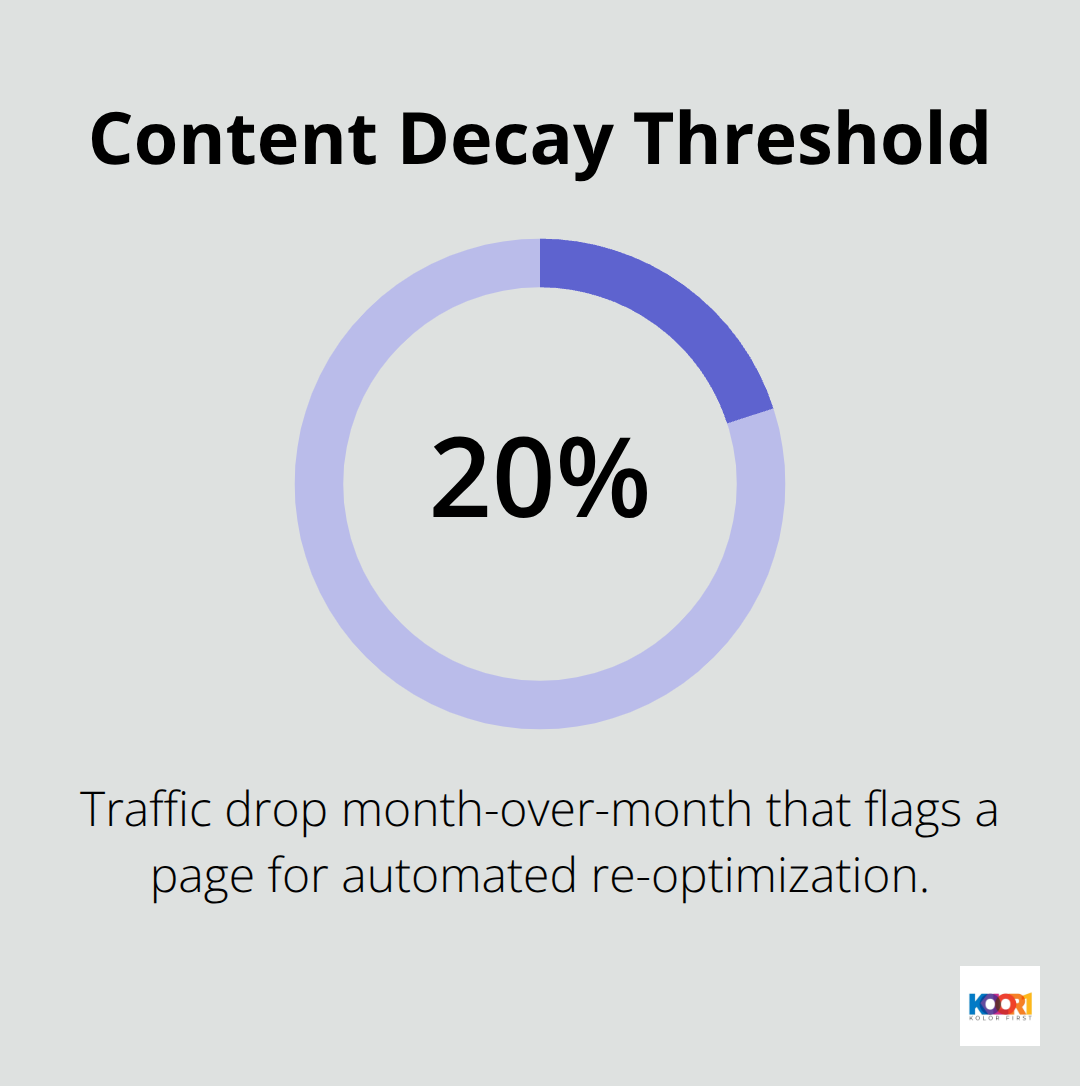
Measure content decay through pages that lose 20% or more traffic month-over-month (which automated tools like Clearscope can detect immediately). Track indexation rates through Google Search Console to confirm your automated content reaches search engines within 24-48 hours of publication.
Analytics Tools and Automated Dashboards
Looker Studio creates automated SEO dashboards that pull data from Google Analytics, Search Console, and third-party tools into unified reports. Set up weekly automated reports that track organic traffic changes, keyword position shifts, and conversion rate improvements from SEO efforts. Configure alerts for position drops exceeding 5 positions or traffic decreases above 15% week-over-week.

The most effective automated reports focus on revenue attribution – track which automated SEO activities generate actual sales rather than just traffic increases. Connect your CRM data to SEO tools through APIs so you can measure customer lifetime value from organic traffic sources.
Data-Driven Strategy Adjustments
Adjust automation priorities based on profit margins rather than traffic volume alone. Monitor which automated content types produce the highest conversion rates and scale those workflows first. Track technical SEO improvements through Core Web Vitals scores and mobile usability reports that update automatically every week.
Use automated A/B tests for meta descriptions and title tags to identify which variations produce higher click-through rates. Review automated link opportunities monthly and pause workflows that generate low-quality backlinks or spam penalties. Regular website maintenance ensures your automated systems continue performing optimally while maintaining performance monitoring standards.
Final Thoughts
Automatic SEO transforms how businesses approach search optimization. Companies reduce manual work from hours to minutes while they maintain accuracy through real-time data integration. These systems deliver measurable improvements in organic traffic, keyword rankings, and conversion rates within 3-6 months of deployment.
Successful automatic SEO implementations focus on revenue-generating activities rather than vanity metrics. Track organic sessions that convert to actual sales and monitor featured snippet captures. Measure domain authority improvements of 5-10 points over six months (these metrics reveal true business impact from automated workflows).
Long-term success requires balance between automation and human oversight. Review automated processes monthly to prevent low-quality backlinks or content decay issues. We at Kolorfirst LLC help businesses implement comprehensive digital marketing solutions that complement automated SEO strategies through creative branding and UX consulting.